Brain Supplement Guide: How to Read the Label Before You Buy
Read a brain supplement label in a fixed order: the serving, every printed amount, the blend total and its order, the other ingredients, then the caution. Research amounts belong beside the label, never on it, and who was in a trial matters as much as the dose. This guide walks through each step, using the Harmo Brain panel as the worked example.
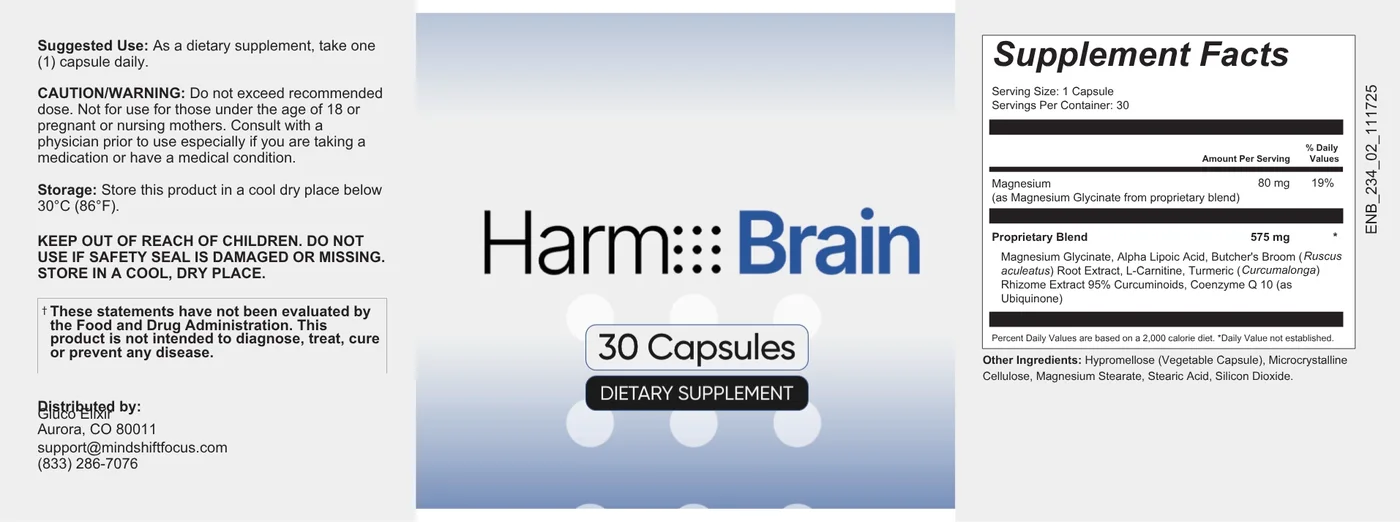
What A Supplement Facts Panel Has To Show
Four things every panel carries, and why the order you read them in matters.
- The serving size and servings per container, so every figure has a unit.
- Each dietary ingredient with its amount, or, for a blend, the blend total with its contents listed heaviest first.
- A percent Daily Value wherever one has been set, as it has for magnesium.
- The other ingredients, such as the capsule shell and processing aids, under the panel.
The layout is set by the federal rule for Supplement Facts panels. It is why every US supplement label reads the same way and can be compared with any other.
Read the panel before the front of the bottle. The front is where the brand speaks; the panel is where the rule speaks.
Proprietary Blends And The Order Of Their Names
The most common shape on a brain supplement label, and what it still tells you.
A proprietary blend is a named mix that declares its total weight and lists its contents by weight, heaviest first. Individual amounts are not required, which is why most brain supplements print one or two figures and a blend total.
The order is still information: in a blend of six in 575 mg, the last material weighs no more than 96 mg, a sixth of the total.
The article reading a 575 mg blend by the order of its names works through this for one panel.
- The largest item. The first name. On the worked example, magnesium glycinate.
- A ceiling for the smallest. No more than the total divided by the number of names.
- A reason to ask. Where a printed amount is carried by a blend item, the carrier takes up part of the total.
Daily Value, RDA And The Upper Limit
Three figures that sound alike and answer different questions.
| Figure | What it is | For adult magnesium |
|---|---|---|
| Daily Value | The single reference amount labels use for % DV. | 420 mg, so 80 mg is 19% |
| RDA | What meets the needs of most healthy people, from food and supplements together. | 400 to 420 mg for men, 310 to 320 mg for women |
| Upper limit | The most unlikely to cause harm. For magnesium it applies to supplements and medicines only, not food. | 350 mg a day |
The % DV answers how much of the reference amount one serving gives. The upper limit answers a different question: how much from supplements is too much. Anyone taking several products with magnesium should add them up and compare the total with 350 mg, not with the Daily Value.
Three Questions To Ask Of Any Study
Every research figure on a brain supplement page should survive all three.
How much?
What amount did the volunteers take, and could that amount fit in the capsule you are reading about?
Who?
Healthy adults, older adults, or people with a diagnosis? A result travels only as far as its population.
How long?
Ten weeks, three months, eighteen months? A result at week twelve says nothing about week one.
What Studies Used, Next To What The Label Prints
The research column and the label column, on the worked example. They are never the same fact.
| Ingredient | What studies used | What the label prints | Source |
|---|---|---|---|
| Magnesium (as magnesium glycinate) | A median 368 mg a day for about 3 months across 34 blood-pressure trials. Adult RDA 310 to 420 mg from all sources; 350 mg a day is the upper limit from supplements. | 80 mg, 19% of the Daily Value | Zhang X, NIH Office of Dietary Supplements |
| Alpha lipoic acid | 600, 1,200 and 1,800 mg a day in diabetic nerve trials. No dementia trial met Cochrane’s criteria. | Second in the 575 mg blend | Hsieh RY, Sauer J |
| Butcher’s broom root extract | 150 mg a capsule, combined with hesperidin methyl chalcone and vitamin C, in vein trials. | Third in the 575 mg blend | Boyle P |
| L-carnitine | 1.5 g a day for 10 weeks in prefrail older adults; oral doses of 1 to 6 g are 5 to 18% absorbed. | Fourth in the 575 mg blend | Badrasawi M, Evans AM |
| Turmeric extract, 95% curcuminoids | 90 mg of curcumin twice a day, in a high-absorption form, for 18 months. | Fifth in the 575 mg blend | Small GW |
| Coenzyme Q10 (ubiquinone) | 400 mg a day for 12 weeks in adults averaging 74; blood levels rose, muscle mitochondria did not change. | Last in the 575 mg blend | Schmücker M |
Every research amount on this page is the amount a published study gave. Harmo Brain prints one amount, 80 mg of magnesium; the other five materials share a 575 mg blend, so none of these trial figures describes the capsule.
Who Was In The Trial
Several well-known studies behind these ingredients ran in people with a diagnosis. That makes them specific, not wrong.
| Study | Who took part | What that means for a healthy reader |
|---|---|---|
| Alpha lipoic acid, 10 trials | 1,242 people with diabetic nerve damage | A dose and safety reference, not a result for a healthy brain. |
| Acetyl-L-carnitine, meta-analysis | People with mild cognitive impairment or mild Alzheimer’s disease | A different form of carnitine from the L-carnitine on this kind of label. |
| Ruscus combination, pooled trials | 10,246 people with chronic venous insufficiency | A leg-vein finding for a three-ingredient capsule. |
| L-carnitine and thyroid hormone | 50 women on thyroid hormone | An interaction signal worth knowing. |
| Bioavailable curcumin | 40 adults aged 51 to 84 without dementia | The closest to a healthy reader, in a high-absorption form. |
| L-carnitine in prefrail adults | 50 prefrail older adults | A muscle and frailty finding, not a brain one. |
How Long The Trials Ran
Every research amount on this page is the amount a published study gave. Harmo Brain prints one amount, 80 mg of magnesium; the other five materials share a 575 mg blend, so none of these trial figures describes the capsule.
- 10 weeks
L-carnitine, prefrail older adults
1.5 g a day; frailty score and grip strength improved against placebo.
- 12 weeks
CoQ10, adults averaging 74
400 mg a day; blood levels rose, muscle mitochondrial function did not change.
- About 3 months
Magnesium, 34 trials
A median 368 mg a day; systolic pressure fell by about 2 mm Hg.
- 6 months
L-carnitine and thyroid hormone
2 or 4 g a day; carnitine blunted thyroid hormone action.
- 18 months
Curcumin, adults without dementia
90 mg twice a day, in a high-absorption form.
Interactions Worth Raising Before You Start
Six published points for the materials on the worked example.
| Ingredient | Medicine or condition | What the research says |
|---|---|---|
| Alpha lipoic acid | diabetes medicines and insulin | Alpha lipoic acid has been linked to insulin autoimmune syndrome, a rare cause of low blood sugar, in case reports. (source) |
| Coenzyme Q10 | warfarin and insulin | NCCIH notes CoQ10 may interact with the blood thinner warfarin and with insulin. (source) |
| L-carnitine | thyroid hormone (levothyroxine) | L-carnitine acts as a peripheral antagonist of thyroid hormone at trial doses of 2 to 4 g a day. (source) |
| Magnesium | bisphosphonates and some antibiotics | The NIH Office of Dietary Supplements lists oral bisphosphonates, tetracyclines and quinolone antibiotics as medicines magnesium may interact with, and notes that diuretics and proton pump inhibitors can change magnesium status. (source) |
| Butcher’s broom | high blood pressure | Ruscus acts on alpha-adrenergic receptors and tightens veins, which is why it has been proposed as a remedy for low blood pressure. (source) |
| Turmeric extract | liver conditions and pregnancy | Turmeric products have been linked to liver injury, and NCCIH says turmeric supplements may be unsafe in pregnancy. (source) |
Names are enough for this check
A blend still names its materials, and a name is all an interaction check needs.
Artwork Words And Label Claims
Two kinds of words on the same box, and which one to weigh.
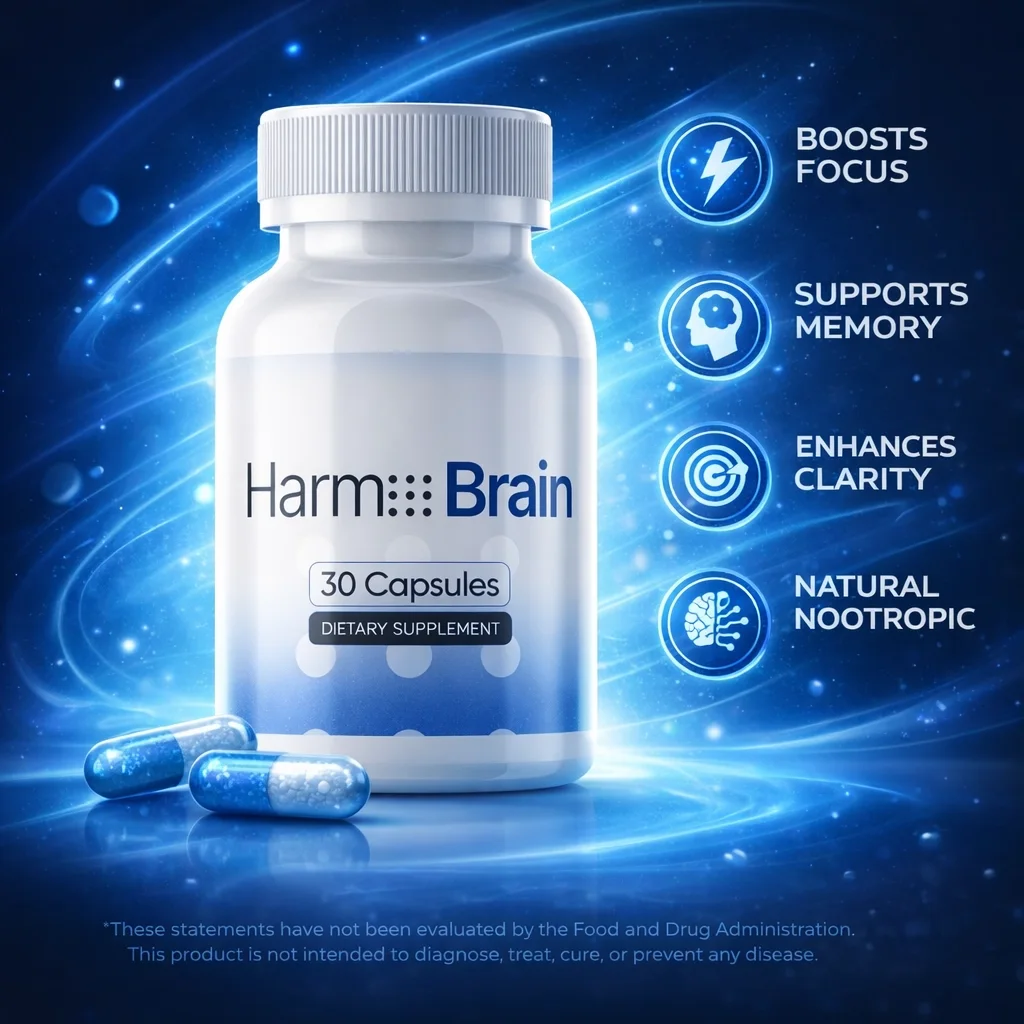
Brain supplements are sold with artwork, and artwork is written to be remembered. On the worked example it reads Boosts Focus, Supports Memory, Enhances Clarity and Natural Nootropic.
When the two differ, the narrower one is the one with a label behind it. Advertised health claims need competent and reliable scientific evidence, and the question to ask of any artwork line is which study of the finished product supports it.
What The FDA Does And Does Not Review
Sold without a pre-market review
The FDA is not authorized to review dietary supplements for safety and effectiveness before they are marketed. No supplement carries an FDA approval, and a roundel that reads “Registered FDA Facility” describes the factory, not the product.
What the rules do require is the panel itself.
The Method, Applied To The Harmo Brain Panel
Five steps, and the whole label is read.
- 1
Serving
1 capsule, 30 servings: a bottle is a month.
- 2
Printed amounts
Magnesium 80 mg, 19% DV, well inside the 350 mg upper limit.
- 3
Blend
575 mg of six, magnesium glycinate first and CoQ10 last.
- 4
Other ingredients
A hypromellose capsule and four processing aids.
- 5
Caution
Not under 18, not in pregnancy or while nursing; consult a physician first if you take a medication.
Who Wrote This Guide
Four commitments, each one checkable in a few minutes:
- The bottle is the source. The six blend materials, the 80 mg magnesium figure, the 575 mg blend total, the capsule count, the directions and the caution block come from the printed Supplement Facts panel. Contacts, the lot reference and the guarantee terms come from this retail desk’s own records.
- Research amounts live in their own column, headed “What studies used”, beside a column that says what the label prints. No sentence here moves a number from the first into the second.
- Sources are cited against their own population. Where a trial ran in people with a diagnosis, the sentence says so, and the result is not carried across to a healthy reader.
- Corrections change the date. Write to [email protected] and the review date moves forward.
We earn when you buy. Harmobraine is the USA Authorized Harmo Brain Retailer named at the top of this page, and this website makes money on orders placed through it. That is why the three-star roster lines, the note on what a proprietary blend leaves unsaid and the interaction list are printed here as well. Order support on +1 (302) 200-3480 handles tracking, changes and refunds; orders go through the official checkout only.
Sources For This Guide
- NIH Office of Dietary Supplements. Magnesium: Fact Sheet for Health Professionals. https://ods.od.nih.gov/factsheets/Magnesium-HealthProfessional/
- Zhang X, Li Y, Del Gobbo LC, Rosanoff A, Wang J, Zhang W, et al. Effects of Magnesium Supplementation on Blood Pressure: A Meta-Analysis of Randomized Double-Blind Placebo-Controlled Trials. Hypertension. 2016;68(2):324-33. https://pubmed.ncbi.nlm.nih.gov/27402922/
- Hsieh RY, Huang IC, Chen C, Sung JY. Effects of Oral Alpha-Lipoic Acid Treatment on Diabetic Polyneuropathy: A Meta-Analysis and Systematic Review. Nutrients. 2023;15(16):3634. https://pubmed.ncbi.nlm.nih.gov/37630823/
- Cappellani D, Sardella C, Campopiano MC, Falorni A, Marchetti P, Macchia E. Spontaneously remitting insulin autoimmune syndrome in a patient taking alpha-lipoic acid. Endocrinol Diabetes Metab Case Rep. 2018;2018:18-0122. https://pubmed.ncbi.nlm.nih.gov/30532997/
- Boyle P, Diehm C, Robertson C. Meta-analysis of clinical trials of Cyclo 3 Fort in the treatment of chronic venous insufficiency. Int Angiol. 2003;22(3):250-62. https://pubmed.ncbi.nlm.nih.gov/14612852/
- Redman DA. Ruscus aculeatus (butcher’s broom) as a potential treatment for orthostatic hypotension, with a case report. J Altern Complement Med. 2000;6(6):539-49. https://pubmed.ncbi.nlm.nih.gov/11152059/
- Badrasawi M, Shahar S, Zahara AM, Nor Fadilah R, Singh DK. Efficacy of L-carnitine supplementation on frailty status and its biomarkers, nutritional status, and physical and cognitive function among prefrail older adults: a double-blind, randomized, placebo-controlled clinical trial. Clin Interv Aging. 2016;11:1675-1686. https://pubmed.ncbi.nlm.nih.gov/27895474/
- Montgomery SA, Thal LJ, Amrein R. Meta-analysis of double blind randomized controlled clinical trials of acetyl-L-carnitine versus placebo in the treatment of mild cognitive impairment and mild Alzheimer’s disease. Int Clin Psychopharmacol. 2003;18(2):61-71. https://pubmed.ncbi.nlm.nih.gov/12598816/
- Benvenga S, Ruggeri RM, Russo A, Lapa D, Campenni A, Trimarchi F. Usefulness of L-carnitine, a naturally occurring peripheral antagonist of thyroid hormone action, in iatrogenic hyperthyroidism: a randomized, double-blind, placebo-controlled clinical trial. J Clin Endocrinol Metab. 2001;86(8):3579-94. https://pubmed.ncbi.nlm.nih.gov/11502782/
- Small GW, Siddarth P, Li Z, Miller KJ, Ercoli L, Emerson ND, et al. Memory and Brain Amyloid and Tau Effects of a Bioavailable Form of Curcumin in Non-Demented Adults: A Double-Blind, Placebo-Controlled 18-Month Trial. Am J Geriatr Psychiatry. 2018;26(3):266-277. https://pubmed.ncbi.nlm.nih.gov/29246725/
- Halegoua-DeMarzio D, Navarro V, Ahmad J, Avula B, Barnhart H, Barritt AS, et al. Liver Injury Associated with Turmeric-A Growing Problem: Ten Cases from the Drug-Induced Liver Injury Network [DILIN]. Am J Med. 2023;136(2):200-206. https://pubmed.ncbi.nlm.nih.gov/36252717/
- Schmücker M, Tranberg C, Borch J, Kaae MK, Damgaard M, Flensted-Jensen M, et al. Coenzyme Q10 supplementation raises plasma levels without improving mitochondrial function in older adults. Geroscience. 2026. doi:10.1007/s11357-025-02068-9. https://pubmed.ncbi.nlm.nih.gov/41604113/
- National Center for Complementary and Integrative Health. Coenzyme Q10. https://www.nccih.nih.gov/health/coenzyme-q10
- National Center for Complementary and Integrative Health. Using Dietary Supplements Wisely. https://www.nccih.nih.gov/health/using-dietary-supplements-wisely
- 21 CFR 101.36. Nutrition labeling of dietary supplements. Electronic Code of Federal Regulations. https://www.ecfr.gov/current/title-21/chapter-I/subchapter-B/part-101/subpart-C/section-101.36
- Federal Trade Commission. Health Products Compliance Guidance. https://www.ftc.gov/business-guidance/resources/health-products-compliance-guidance
Try Harmo Brain With A Label You Can Read
One printed amount, a 575 mg blend listed heaviest first, one capsule a day and 60 days from purchase to decide.
Packs of 2, 3 or 6 bottles · price at checkout · 60 days from purchase to ask for a refund
